Emergency Dental Care Near Me: Fair Lawn & Ridgewood, NJ
Need emergency dental care near me in Fair Lawn, Ridgewood, or Glen Rock? Dental Professionals of Fair Lawn offers same-day care for pain. Call now.
Need emergency dental care near me in Fair Lawn, Ridgewood, or Glen Rock? Dental Professionals of Fair Lawn offers same-day care for pain. Call now.
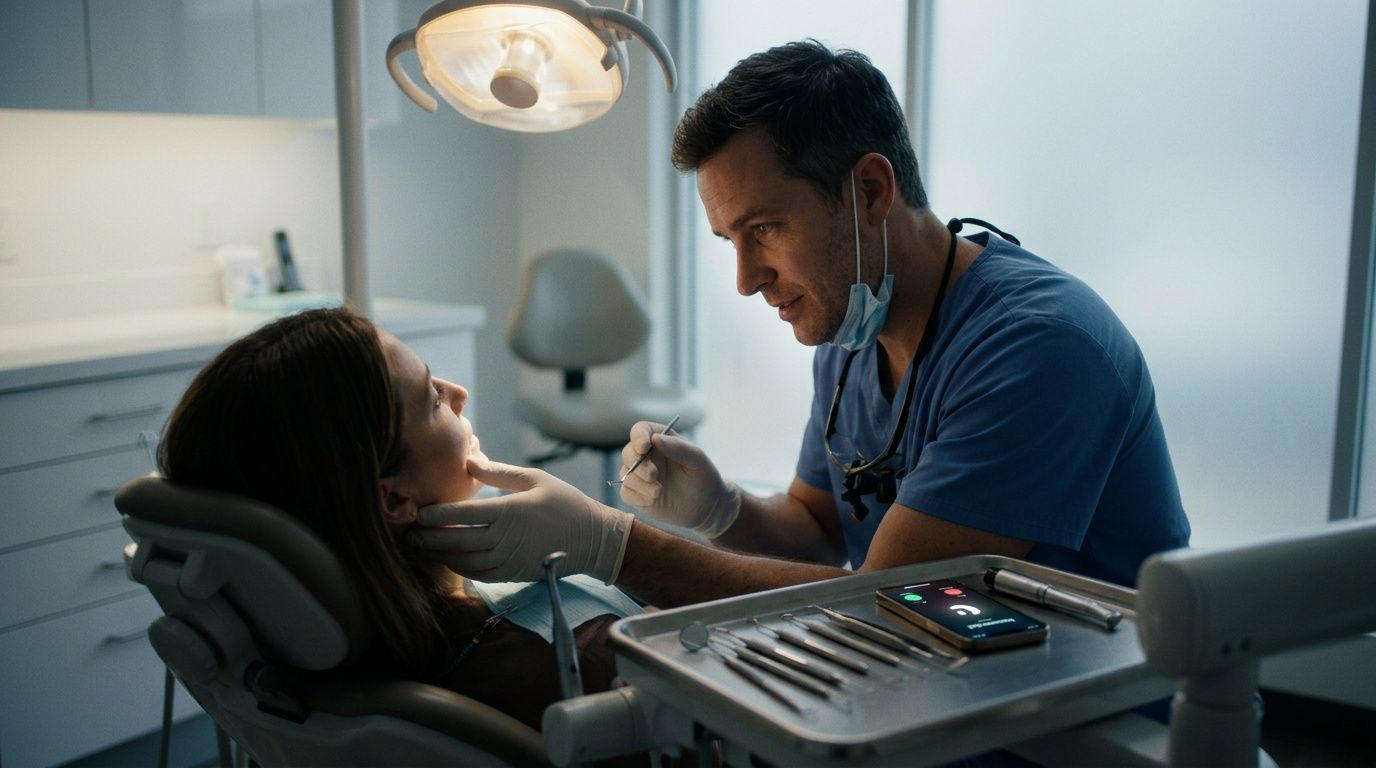
A sharp toothache at 11 p.m. can make the whole house feel tense. A fall at a Saturday game can leave a parent staring at a tooth in their hand, wondering whether to call a dentist, go to the ER, or wait and hope it settles down.
Individuals searching emergency dental care near me are not casually browsing. They're in pain, they're worried about cost, or they're trying to help a child fast. In Fair Lawn, Ridgewood, and Glen Rock, that urgency is real. The right next step depends on what happened, how severe it is, and how quickly you can get the right kind of care.
Dental emergencies are stressful, but they're easier to manage when you know what matters first. The priorities are simple. Control bleeding, protect the tooth or surrounding tissue, reduce swelling, and get professional guidance quickly.
A common call starts with the same tone. Someone says they woke up with throbbing pain on one side of the face, the gum feels swollen, and they can't chew. Another starts with a child on the way home from sports, crying, lip bleeding, and a front tooth looking wrong.
Those situations feel chaotic because dental pain escalates fast. It affects sleep, eating, work, and concentration. Trauma cases add another layer because parents also have to decide whether the tooth can be saved and how urgently they need help.
What usually works is getting calm, focused guidance right away. If there's an accident involved, it also helps to understand why timing matters for medical evaluation in general. Mattiacci Law's medical treatment timeline guide is a useful overview of why prompt care after an injury protects both health and documentation.
In Fair Lawn and nearby communities, emergency calls usually fall into a few practical categories:
When pain is intense or a tooth has been injured, waiting to “see how it feels tomorrow” often makes treatment harder, not easier.
The first goal isn't a perfect long-term fix in that moment. It's getting the problem identified, stopping the situation from worsening, and relieving pain safely. Sometimes that means a focused exam and X-rays. Sometimes it means beginning treatment immediately. Sometimes it means stabilizing the problem first and planning the restorative step after.
If you're searching for a dentist near me because something changed suddenly, trust the fact that your concern is reasonable. Dental problems don't have to be dramatic to deserve prompt attention. If the pain is strong, the swelling is noticeable, the bleeding doesn't stop, or the tooth moved after trauma, it's time to call.
Not every dental problem needs immediate treatment tonight. Some do. The key is separating true emergencies, urgent problems, and issues that can safely wait for a routine visit.

These situations deserve urgent dental attention as soon as possible:
Research in dental emergency management shows that patients treated within 2 to 4 hours of an acute issue have a 60 to 70% reduction in secondary infection rates, and same-day access is associated with 85 to 92% success in resolving pain and saving teeth, according to Smiles Included's emergency dentist overview.
These still need prompt attention, usually within a day:
These aren't usually “wait a week” problems. They often start small, then become more complicated if ignored.
These are important, but they usually don't require same-day emergency care:
| Situation | Typical timing |
|---|---|
| Mild stain or cosmetic concern | Routine appointment |
| Old minor chip with no pain | Routine appointment |
| Food caught between teeth without swelling | Home care, then exam if it persists |
| Intermittent sensitivity that comes and goes | Prompt but non-emergency visit |
Practical rule: If you're asking whether it can wait because you're worried it might get worse overnight, it usually deserves a call.
A hospital ER is appropriate when the dental problem is tied to a broader medical emergency, especially trouble breathing, severe facial injury, or bleeding you can't control. For many tooth-specific emergencies, though, a dentist is the right first stop because treatment depends on dental procedures, not just pain control.
Good first aid doesn't replace treatment, but it can protect a tooth and reduce damage before you arrive. The most helpful steps are usually simple.
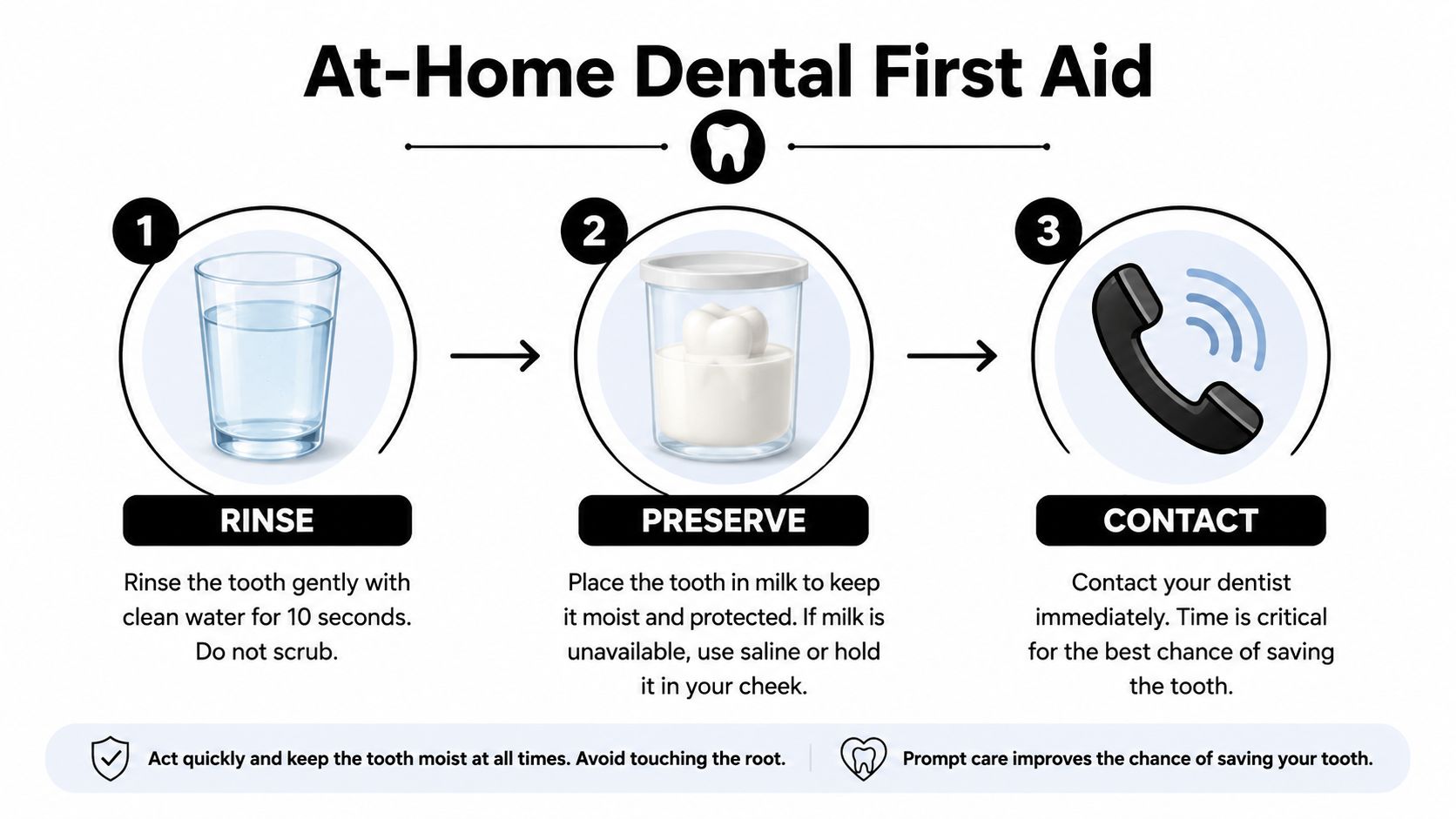
Pick the tooth up by the crown, not the root. If it's dirty, rinse it gently. Don't scrub it. Don't wrap it in tissue and let it dry out.
If it's a permanent tooth, keep it protected and moist while you call for care. If it's a baby tooth, don't try to handle it the same way as a permanent one. Pediatric dental trauma needs its own protocol because a knocked-out baby tooth is managed differently than a permanent tooth, and that distinction matters for future development and infection prevention, as noted by Night and Day Dental's pediatric emergency guidance.
A child's injured tooth should never be treated as “just a smaller adult tooth.” The next step depends on whether the tooth is primary or permanent.
Rinse gently with warm water and check for anything trapped between the teeth. Don't place aspirin directly on the gum. That can irritate the tissue.
Use a cold compress on the outside of the face if swelling is starting. Avoid chewing on that side. If the pain is intense, increasing, or paired with swelling, call right away.
Save any pieces if you can find them. Rinse your mouth gently with warm water. If there's bleeding, apply light pressure with clean gauze.
Then protect the area. Don't bite into hard food, and avoid testing the tooth repeatedly with your tongue or teeth. A crack can extend deeper than it first appears.
A lost filling may leave the tooth sensitive to cold air, food, or pressure. A lost crown can expose a vulnerable tooth that may fracture further if you chew on it.
Keep the area clean and avoid sticky or hard foods. If what came out was a filling, this guide on what to do when a filling falls out can help you avoid the common mistakes people make before they're seen.
If the lip, cheek, or gums are bleeding, apply firm but gentle pressure with clean gauze or cloth. Cold compresses help with swelling. If bleeding continues or the injury is extensive, seek urgent help.
A short checklist helps in almost every scenario:
It is 9 p.m., your child bumps a front tooth at practice, or you bite down and feel a sharp crack. In that moment, the goal is simple. Get the right help fast, know what to bring, and understand what the visit may cost before you walk in.
A prompt call to a dental office helps sort out urgency and saves time. The team can tell you whether the problem needs same-day care, whether a child should be seen differently than an adult, what to bring with you, and whether you may need medical care for a facial injury that goes beyond the teeth or gums.
A useful emergency call should give you clear direction on a few practical points:
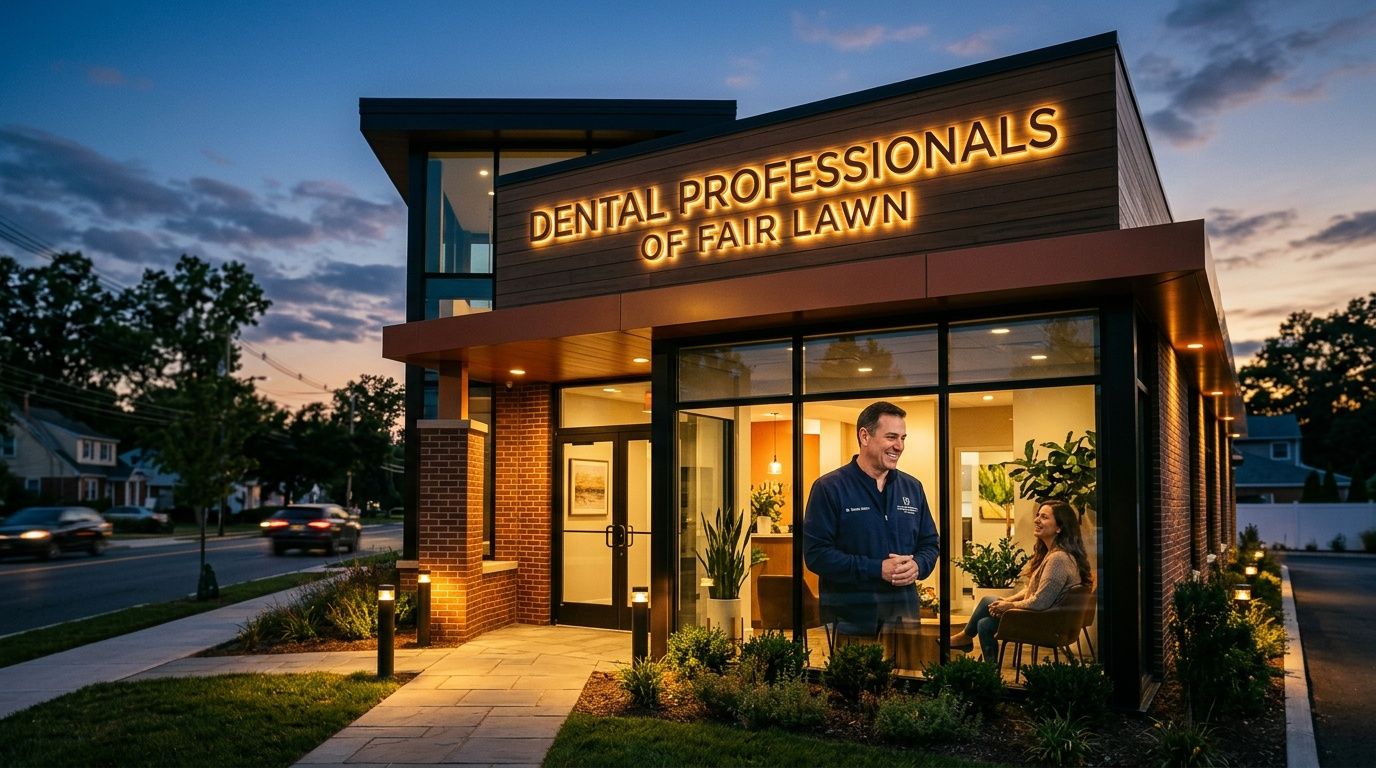
For families in Fair Lawn, Ridgewood, and Glen Rock, that clarity matters. Dental Professionals of Fair Lawn offers a 24-hour emergency phone number, 201-972-6555, for concerns such as severe pain, a loose tooth, swelling, or dental trauma.
If a parent, grandparent, or caregiver is more comfortable speaking in another language, do not wait and hope the details will sort themselves out at the front desk. Clear communication affects timing, consent, and home instructions. Families can also use resources like Translators USA, LLC medical solutions when medical interpreting support is needed.
Call before you leave home if you can. A short triage conversation helps the office prepare for your situation and gives you a better idea of timing, paperwork, and likely costs.
| Have this ready | Why it helps |
|---|---|
| Your main symptom | Pain, swelling, bleeding, trauma, broken tooth |
| When it started | Helps judge how quickly the problem is changing |
| Your age or your child's age | Pediatric injuries often need different guidance |
| Any tooth pieces, crown, or appliance | May affect how the tooth can be repaired |
| Insurance information and budget questions | Lets the office explain fees, payment plans, or financing early |
That last point is often overlooked. Dental emergencies are stressful enough without surprise costs. Ask directly what the exam fee covers, whether X-rays are billed separately, and whether payment plans are available if a child needs treatment the same day. A good emergency office should be willing to explain those trade-offs clearly.
The first priority during an emergency visit is straightforward. Find the source of the problem and get you out of pain as safely and efficiently as possible.

A dedicated dental clinic is often faster and more effective for tooth-specific emergencies than a hospital ER. Hospital emergency rooms can involve longer waits and higher costs, and they may only provide medication rather than definitive dental treatment. A dental office can directly perform procedures such as root canal therapy or reimplantation, as explained by Marin Community Clinics' emergency dental guidance.
Most emergency visits begin with a focused exam. That means attention goes to the area that hurts or was injured, along with a quick review of what happened, your symptoms, and anything that has changed since the incident started.
Digital X-rays are often part of this step because not every crack, infection, or displacement is visible on the surface. A tooth can look minor from the outside and still have a deeper problem under the gumline or inside the root area.
Emergency care often happens in two parts.
First comes immediate relief. That might include draining an infection, stabilizing an injured tooth, replacing or protecting a lost restoration temporarily, starting root canal treatment, or performing a tooth extraction when the tooth can't be saved predictably.
Then comes the restorative plan. Depending on the situation, that may involve a crown, filling, implant, bridge, or follow-up care to restore full function and appearance.
If you've ever felt overwhelmed finding your way through a large medical building, the same principle applies in healthcare design generally. Resources on implementing better hospital wayfinding solutions show why clear directions and lower friction matter so much when patients arrive stressed.
A quick visual overview can also help if you're anxious about the visit:
You'll probably be asked:
You should also feel comfortable asking:
Two worries stop people from getting emergency care more than almost anything else. One is cost. The other is fear.
Both need direct answers.
Emergency dentistry is stressful partly because the bill is unexpected. Available emergency dental pricing data shows that an emergency dental exam commonly ranges from $100 to $250, while a root canal may range from $800 to $1,500, according to San Francisco emergency dental cost information.
Those figures are useful because they show the range patients often face in urgent care. They also explain why people hesitate. That hesitation can turn a manageable problem into a larger one.
What helps is transparency:
Cost shouldn't be a mystery in an emergency. Patients make better decisions when they know what is urgent, what is optional today, and what payment paths are available.
A patient with severe anxiety often delays care until pain leaves no other choice. That creates a cycle. The worse the problem gets, the more treatment is needed. The more treatment is needed, the more the patient fears the visit.
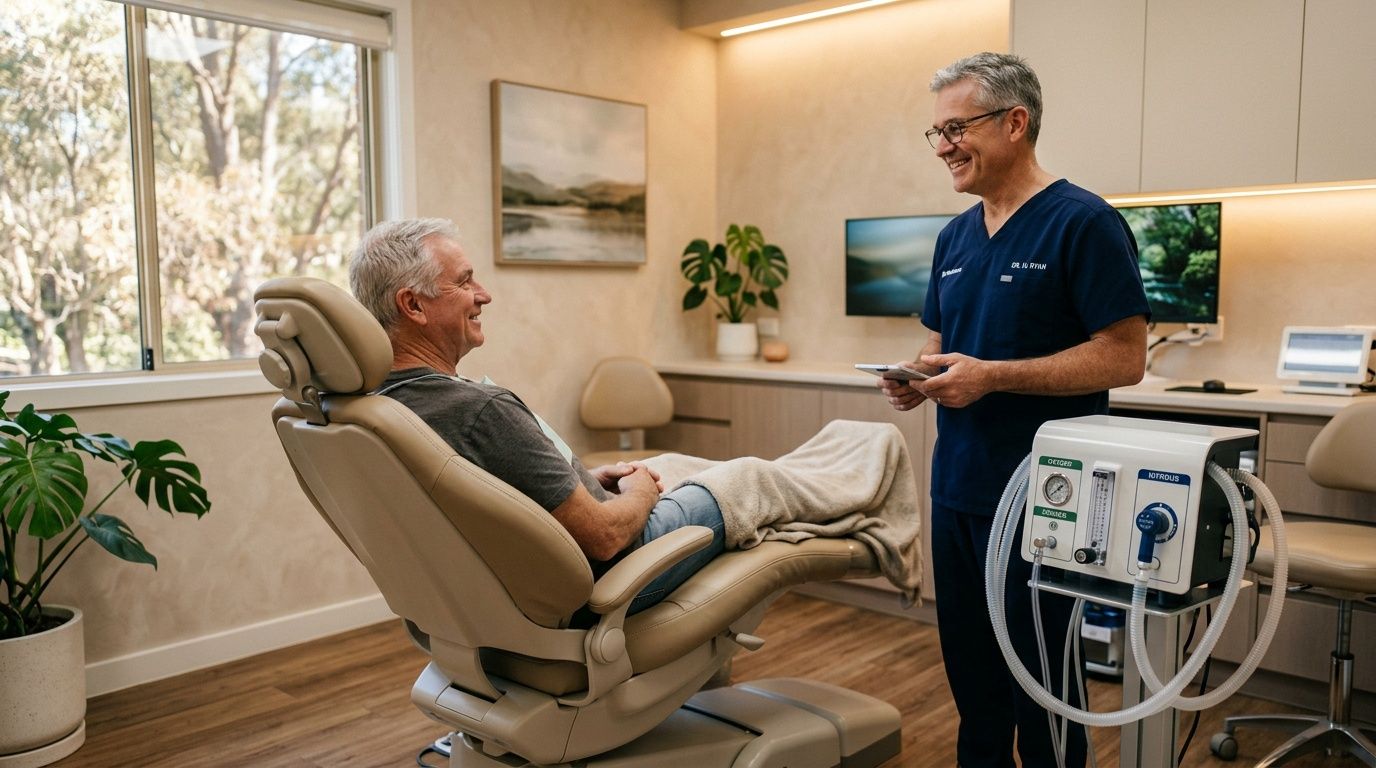
Sedation dentistry helps break that cycle. For some patients, nitrous oxide is enough to take the edge off. Others need oral sedation to relax through treatment they've been avoiding. If anxiety has kept you from calling, review the practice's sedation dentistry options in New Jersey so you know comfort support is available.
The most effective emergency care plans usually do two things at once:
| Barrier | What helps |
|---|---|
| Unexpected cost | Clear pricing, insurance guidance, financing |
| Dental anxiety | Calm communication, pacing, sedation options |
| Fear of major treatment | Immediate relief first, long-term plan second |
This matters for families as much as for adults. A parent making a quick decision for a child needs reassurance on both fronts. What will today cost, and how can this be done without making the experience harder than it needs to be?
An emergency visit is rarely just about getting through today. It often reveals a bigger need. A cracked tooth may need a crown after the pain is controlled. A non-restorable tooth may lead to a discussion about dental implants near me. A child's injury may need follow-up monitoring as the mouth develops.
That's why the best emergency care doesn't end when the pain stops. It turns an urgent problem into a clear plan for long-term oral health.
After emergency treatment, patients often need one of these next steps:
For families in Fair Lawn, Ridgewood, and Glen Rock, that continuity matters. You don't want to repeat your story to a new office every time the next phase starts. You want one team that understands what happened, what was done first, and what the mouth needs now.
Emergency care should solve today's problem and protect tomorrow's smile.
When you're searching for emergency dental care near me, you're usually looking for pain relief first. That makes sense. But the strongest outcome comes from pairing urgent treatment with a long-view plan that keeps the same issue from returning in another form.
If you're in pain, dealing with swelling, or worried about a child's injured tooth, don't wait and hope it settles down on its own. Prompt evaluation gives you more options, clearer answers, and a better chance of protecting the tooth.
If you need urgent help, contact Dental Professionals of Fair Lawn to request emergency dental care. If you're in Fair Lawn, Ridgewood, or Glen Rock and you're dealing with severe pain, swelling, a broken tooth, or a child's dental injury, reach out now so you can get clear guidance and the next available care.